Raw leather
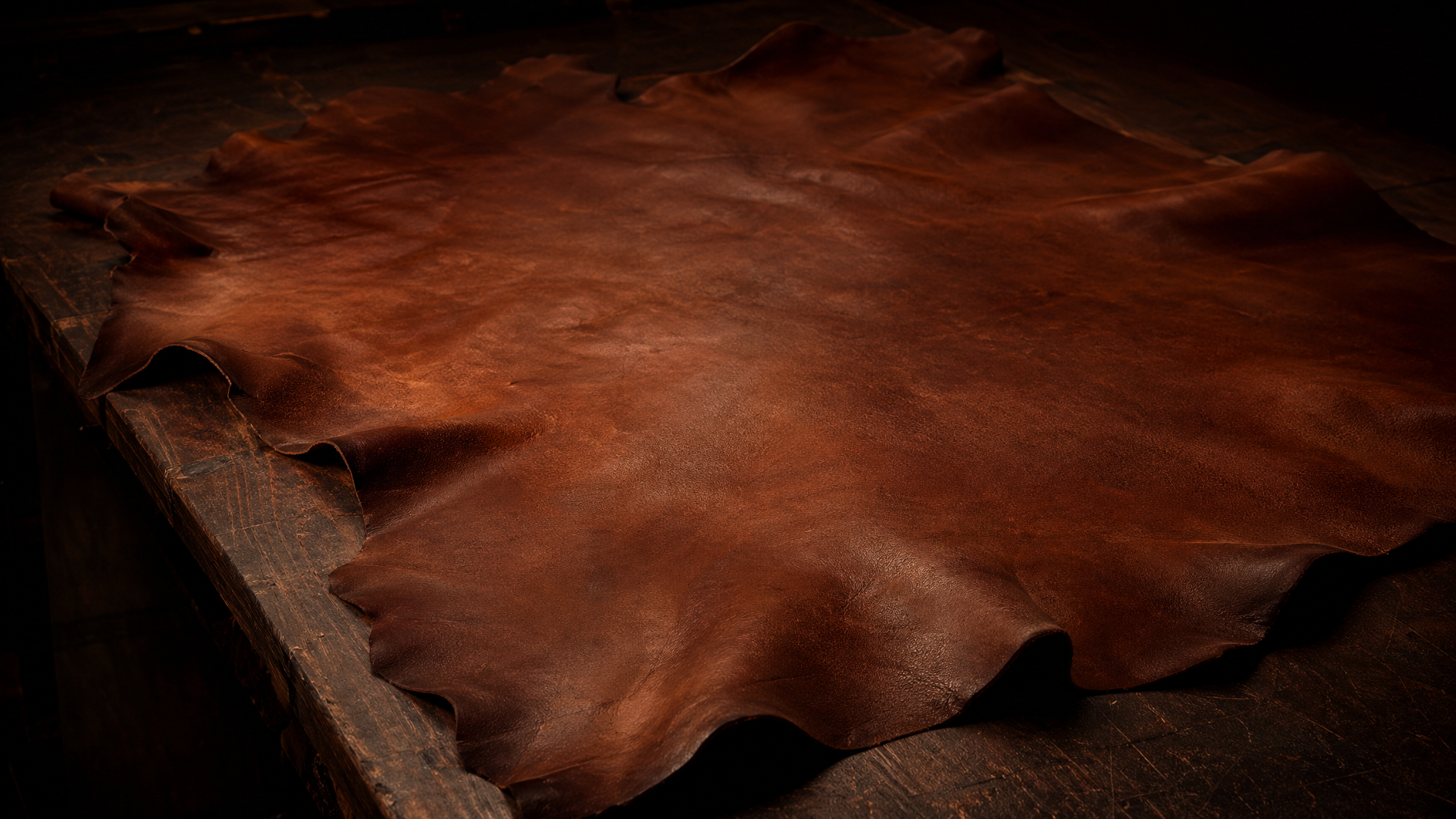
Every product begins with the hide. The first decision is character: grain, temper, thickness, colour depth and usable area.
How leather goods are made
For buyers, the difference is not only the leather. It is the discipline behind pattern, cutting, skiving, stitching, finishing, inspection and packing.
Material to pattern
Thickness, grain, temper, colour consistency and surface markings are reviewed before panels are committed. The goal is not to remove the nature of leather — it is to place it intelligently.
Every product begins with the hide. The first decision is character: grain, temper, thickness, colour depth and usable area.
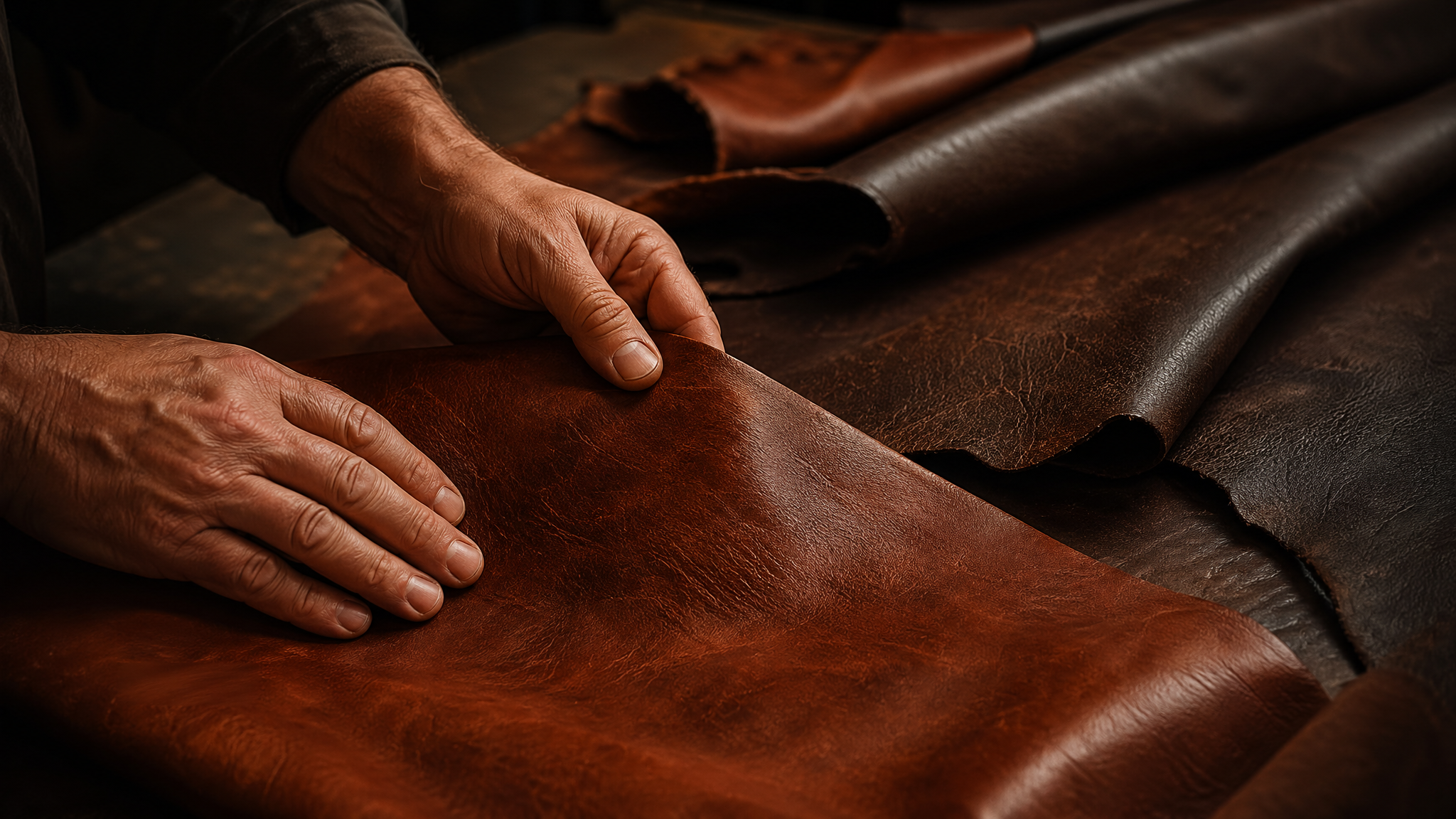
Panels are chosen according to visibility, strength and function. A premium product uses the right part of the hide in the right place.
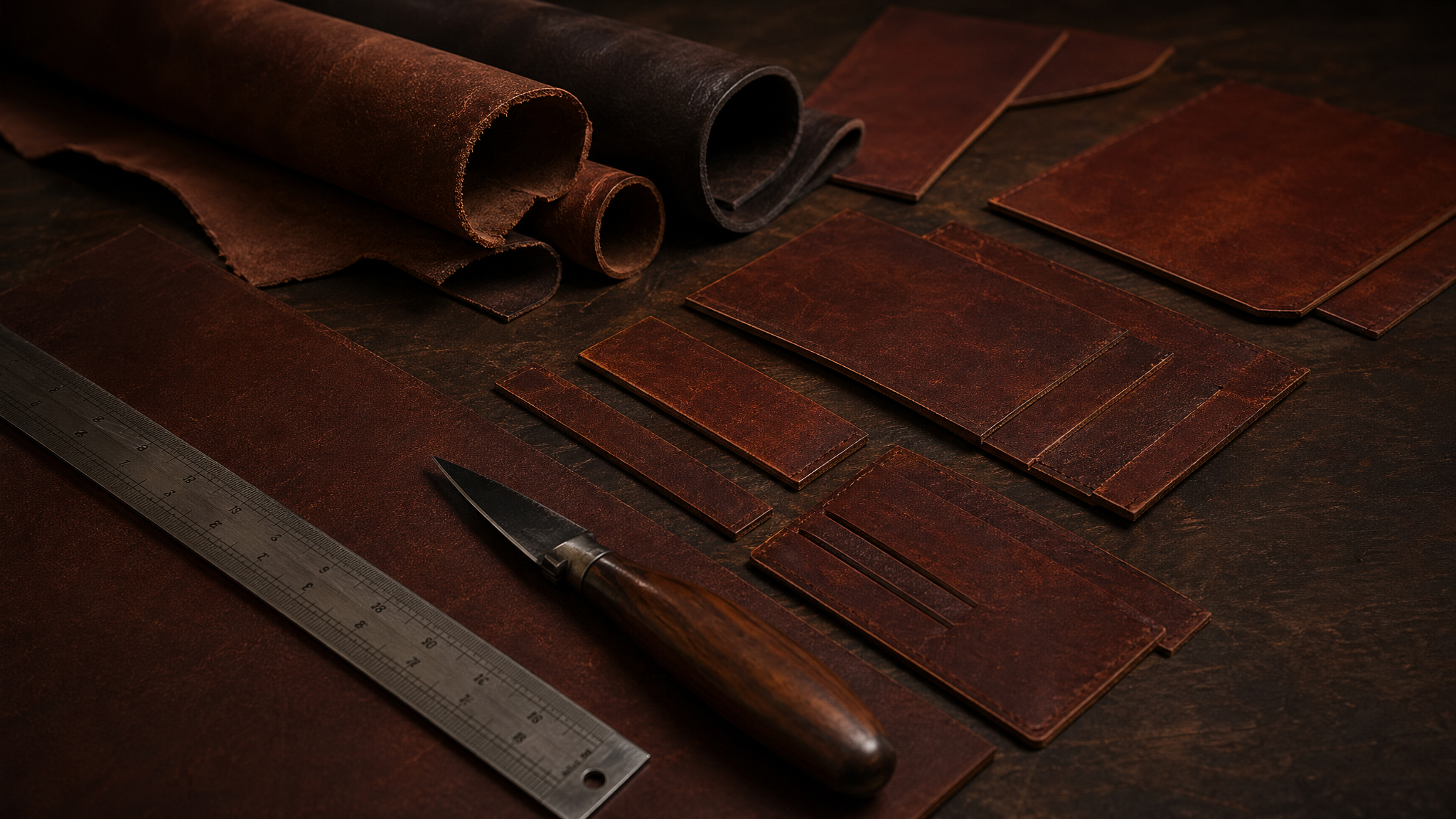
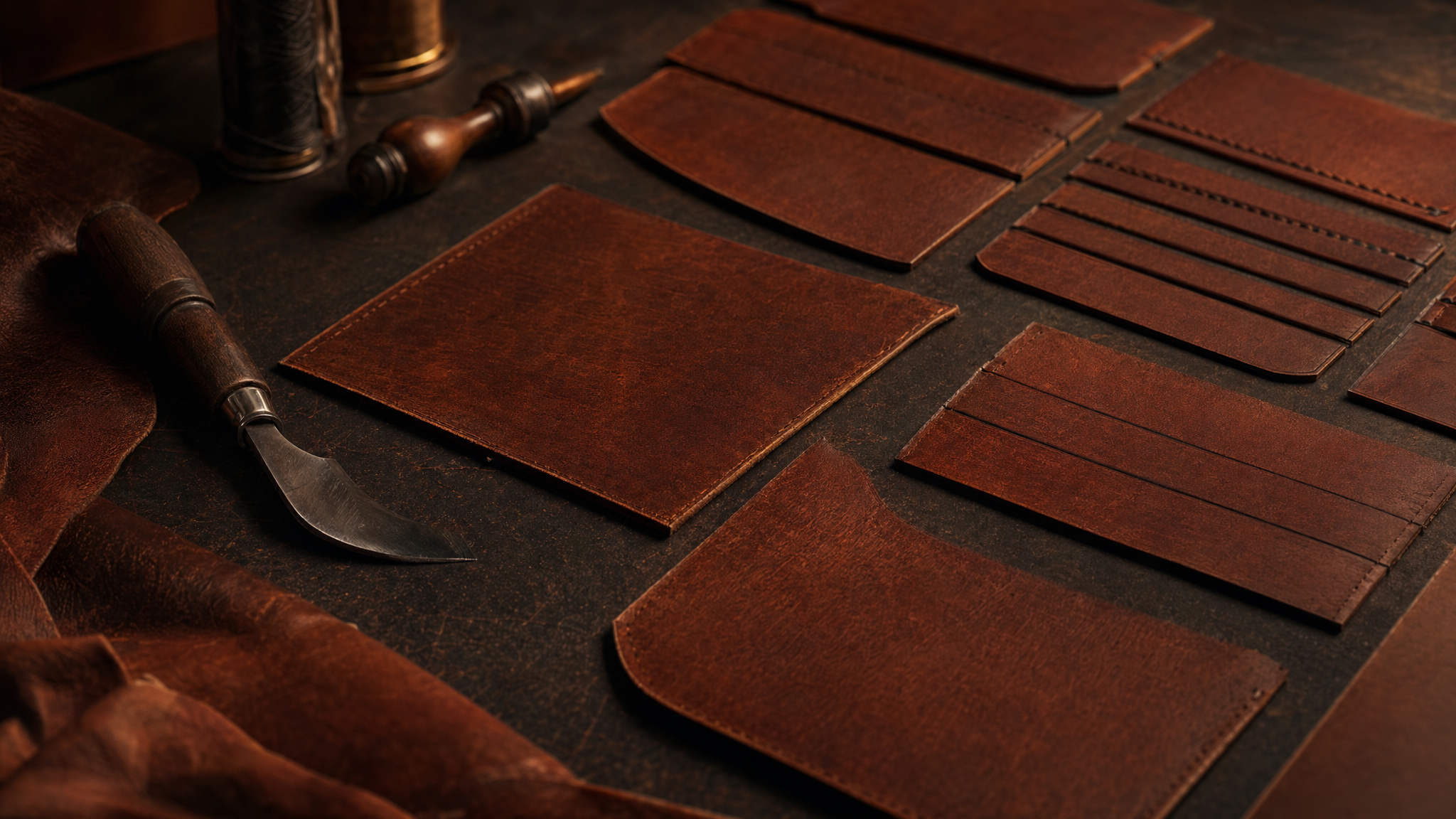
Leather is cut with attention to grain direction, stretch and surface consistency. Cutting accuracy protects the shape of the final product.
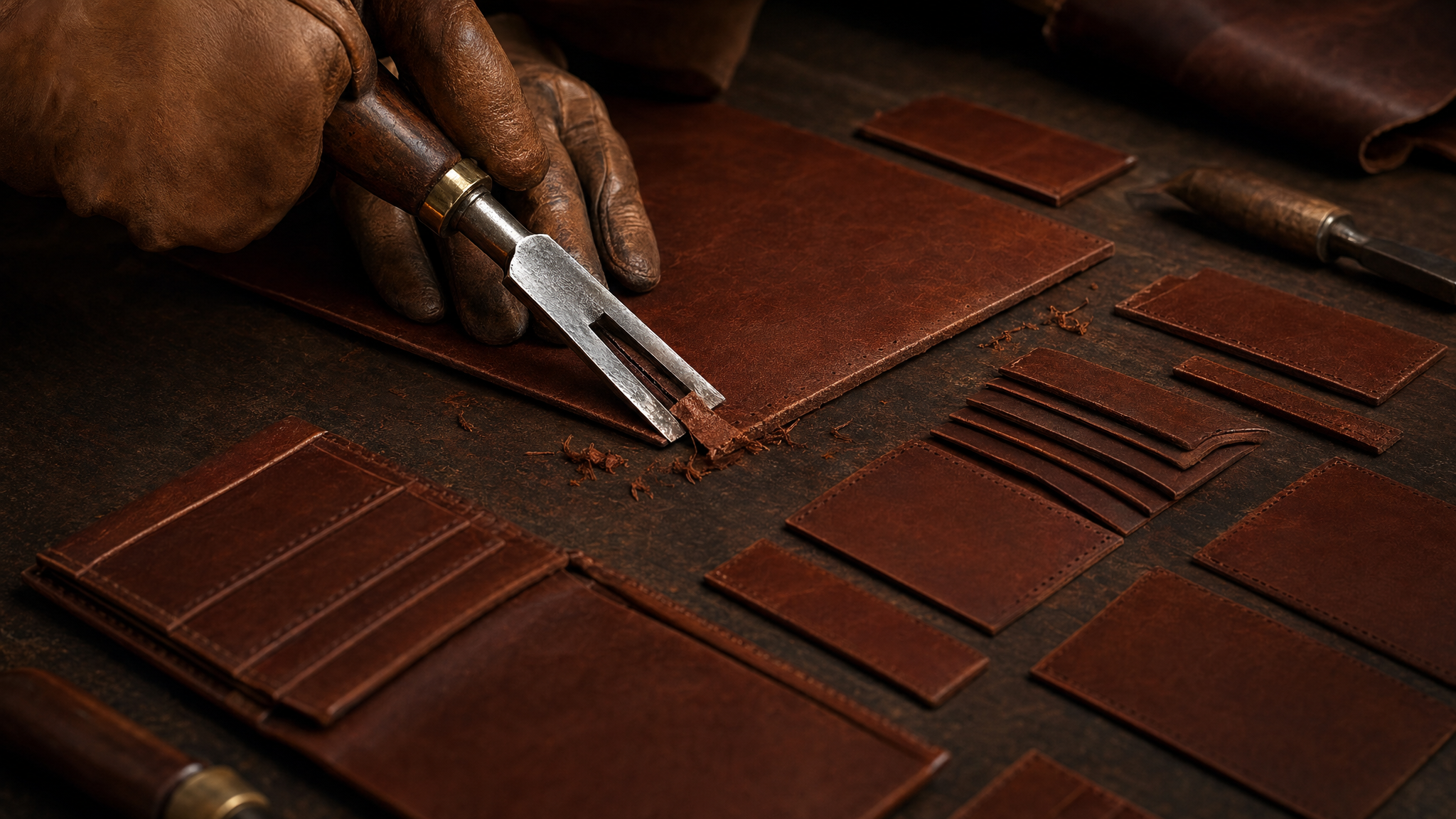
Edges and fold areas are thinned so the finished goods remain refined rather than bulky. This step decides how cleanly the product closes and turns.
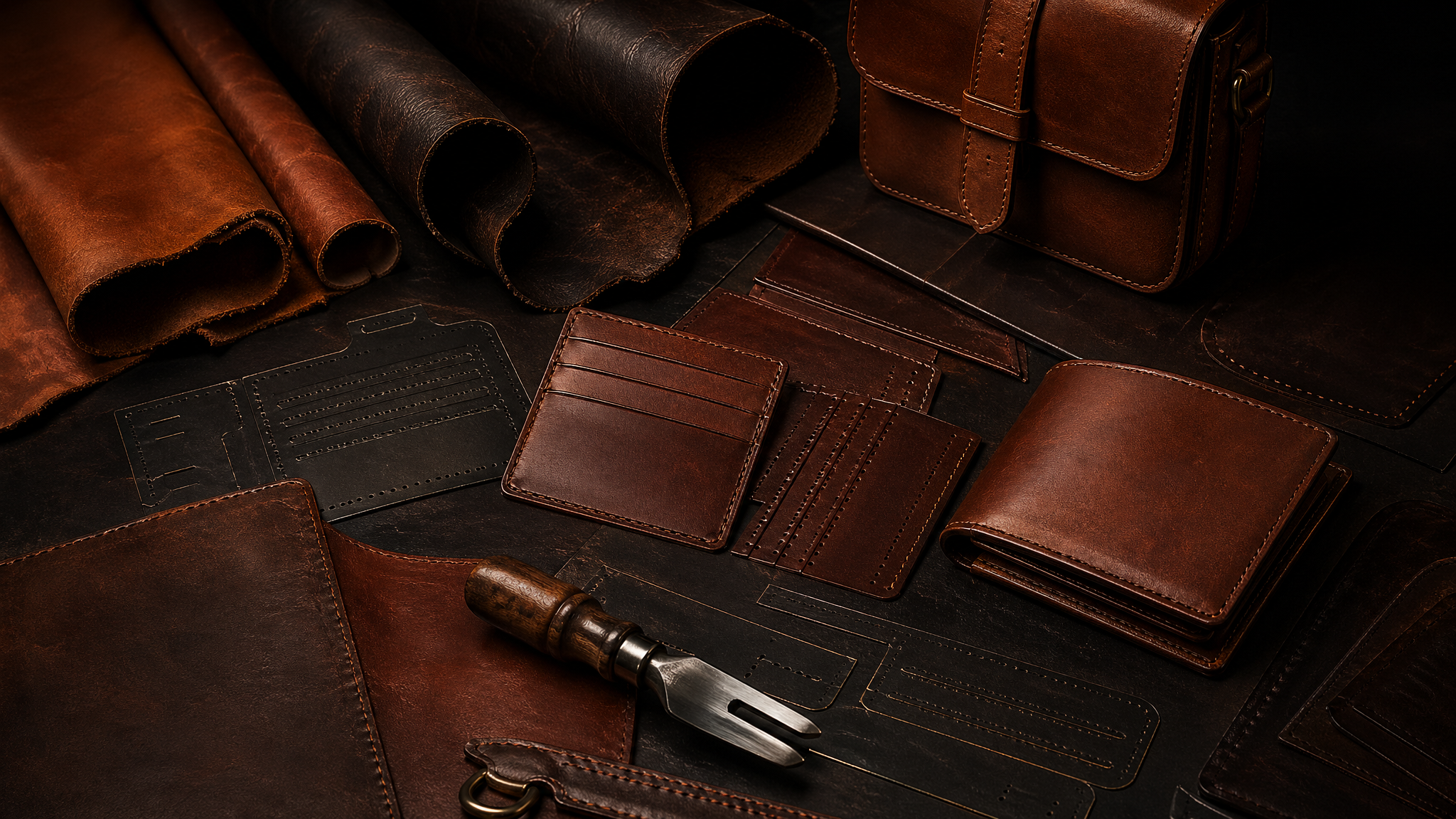
Patterns, reinforcements, linings and pocket layers are prepared before assembly. Repeatability begins here.
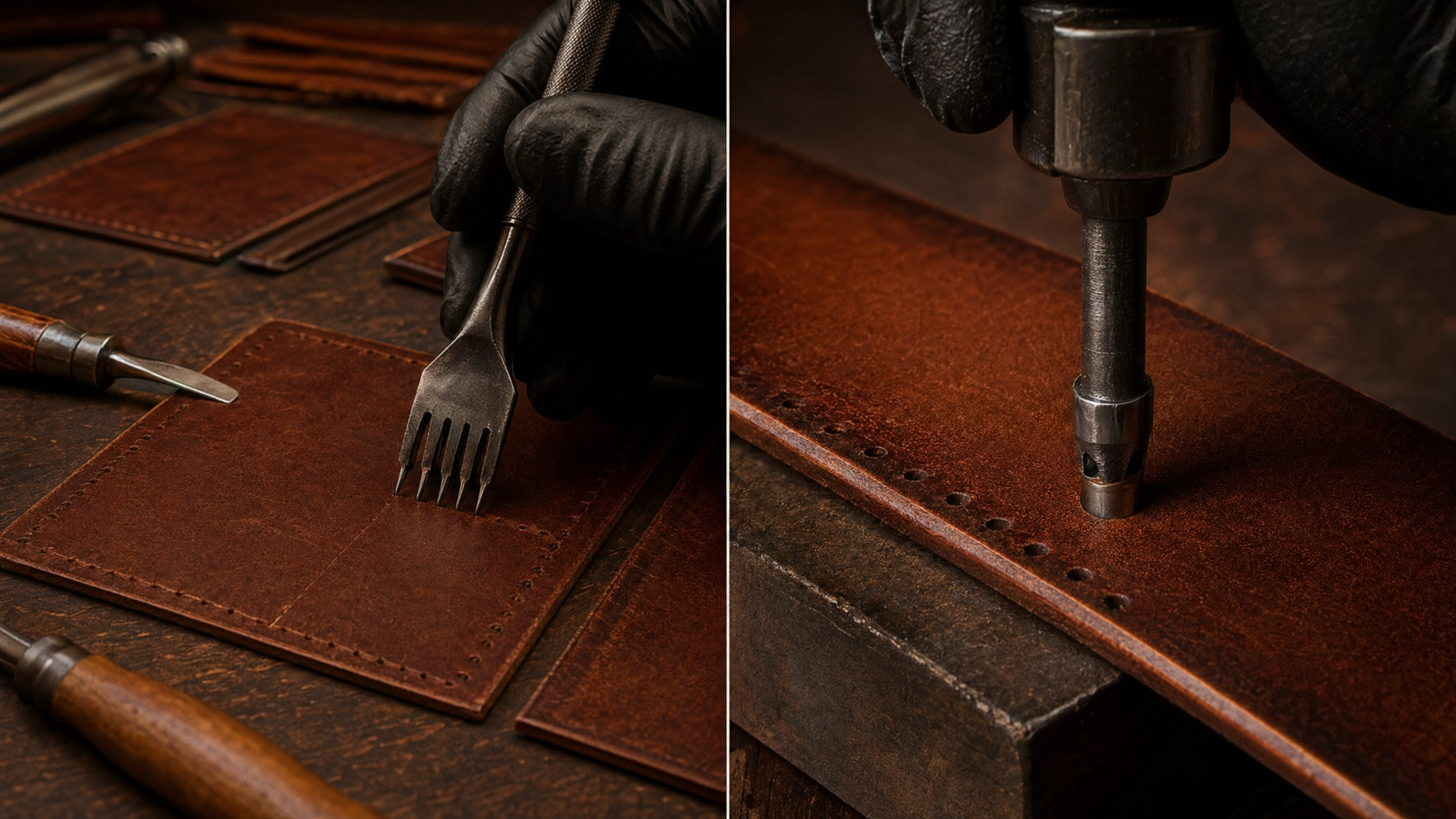
Stitch lines, fold points, holes and hardware positions are marked and punched with precision so construction remains aligned.
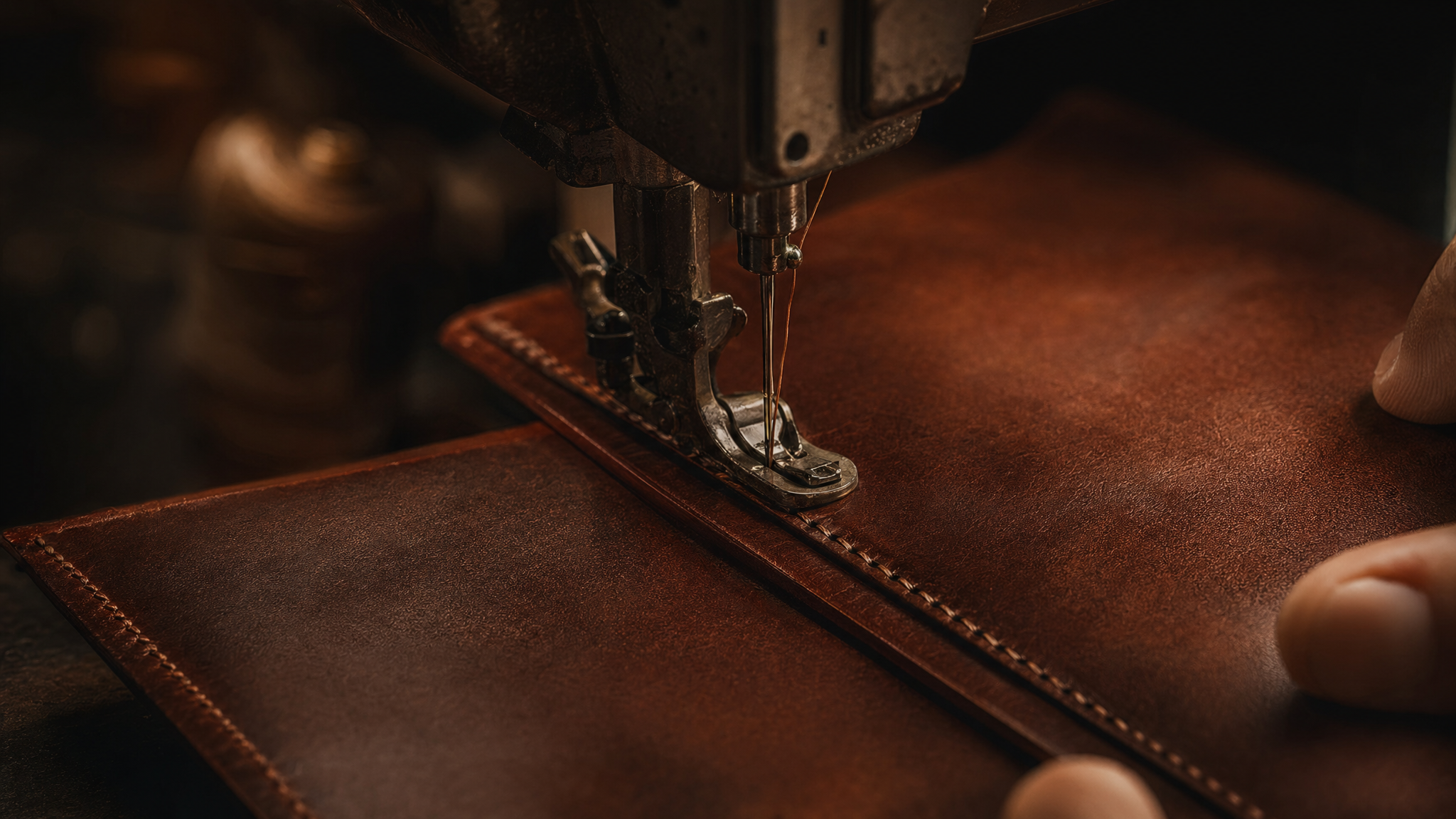
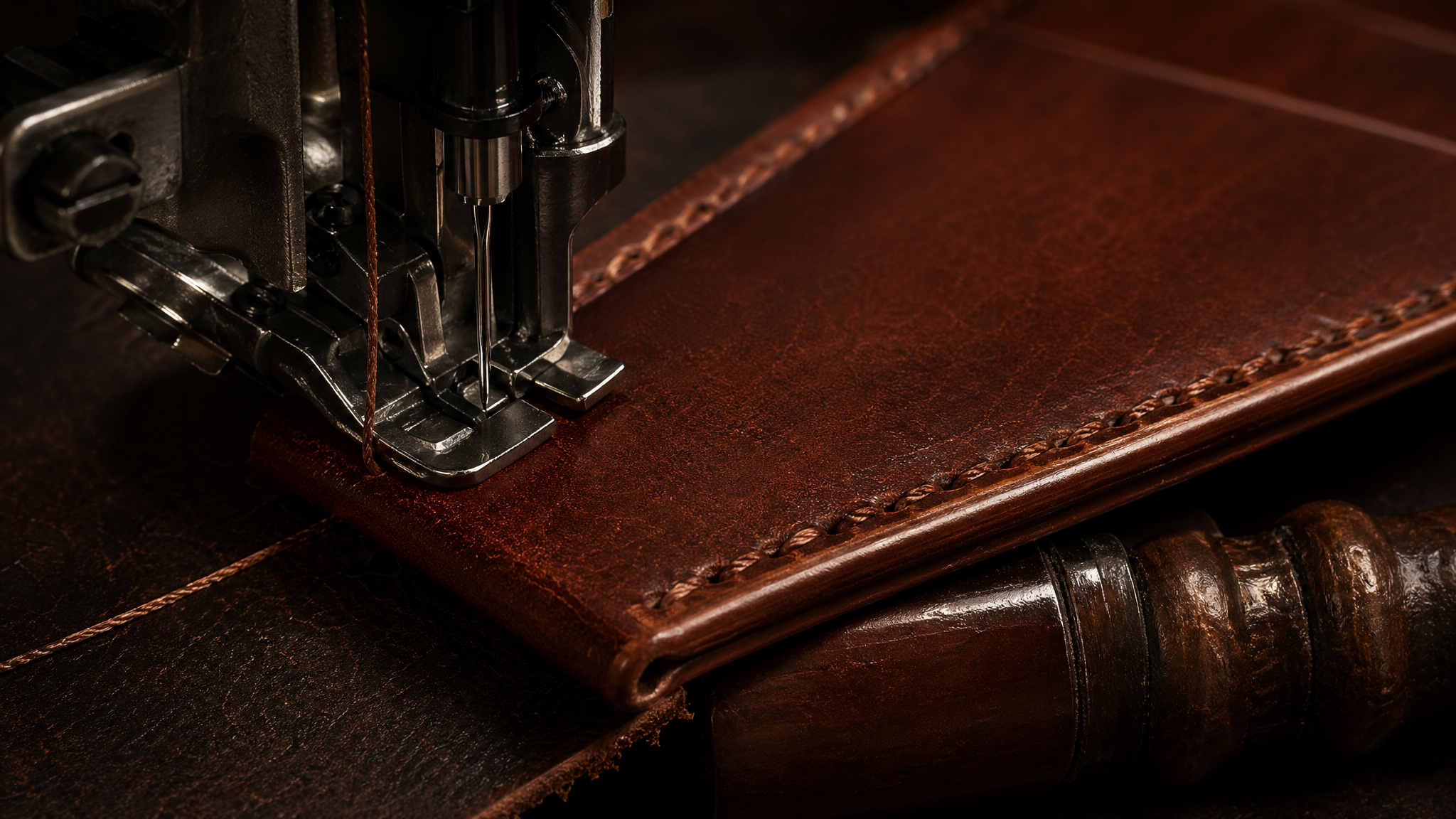
Stitch length, tension and alignment create the visible rhythm of the product. On small leather goods, errors are immediately noticeable.
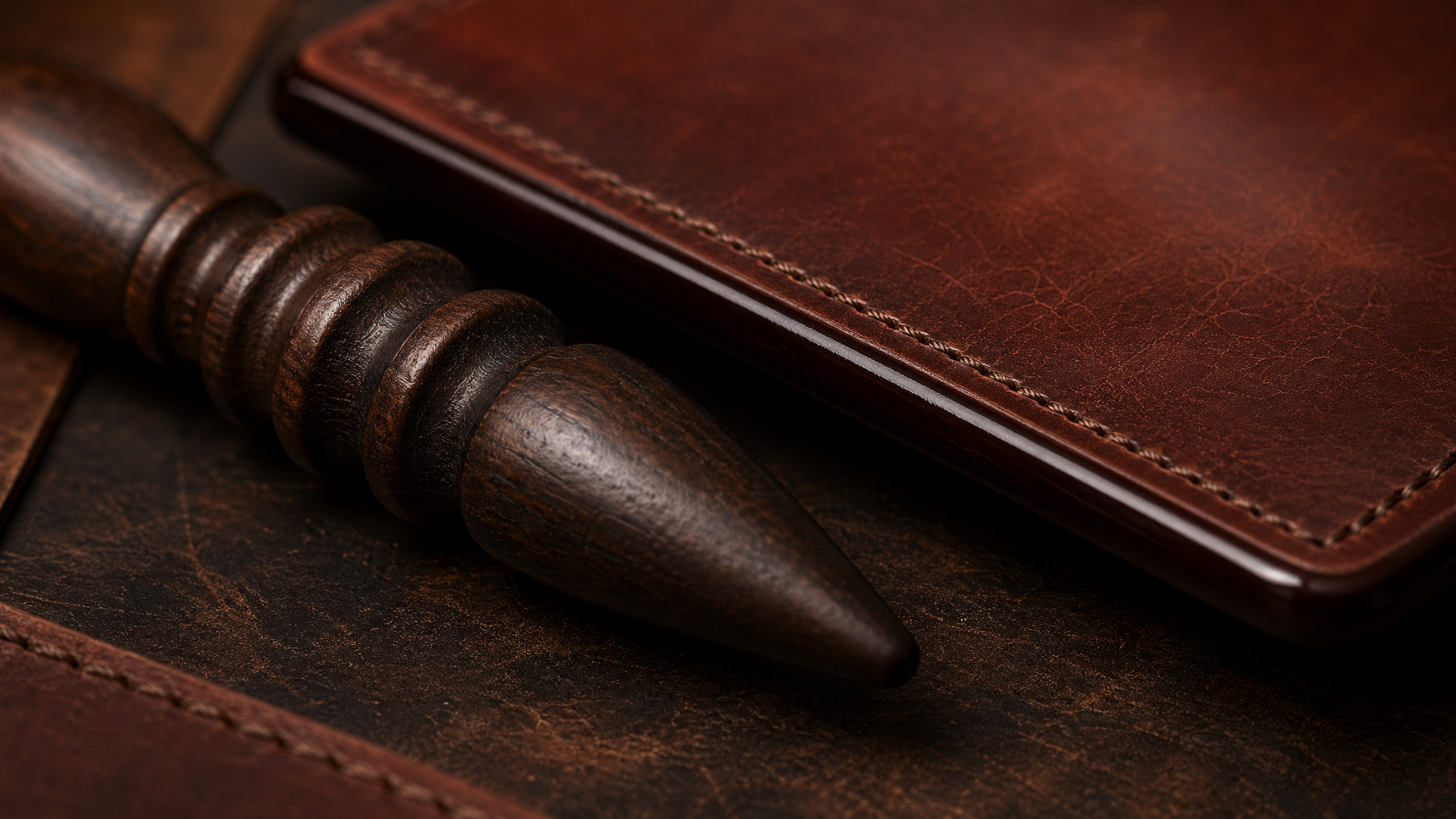
Edges are trimmed, sealed, painted, polished or burnished. This is one of the strongest signals of premium workmanship.
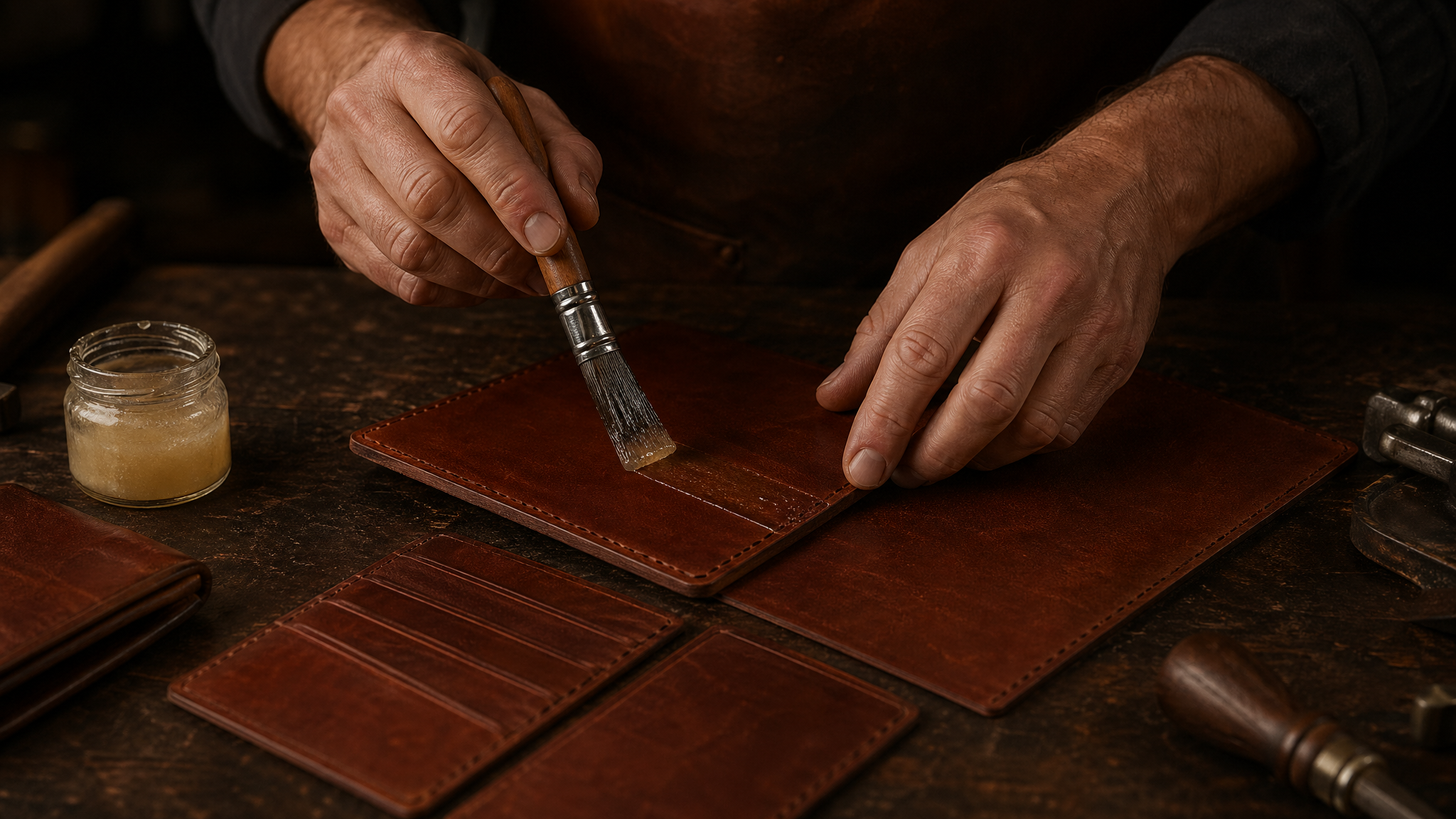
Panels, linings and pockets are assembled in controlled layers. Good assembly keeps the product stable without making it feel heavy.
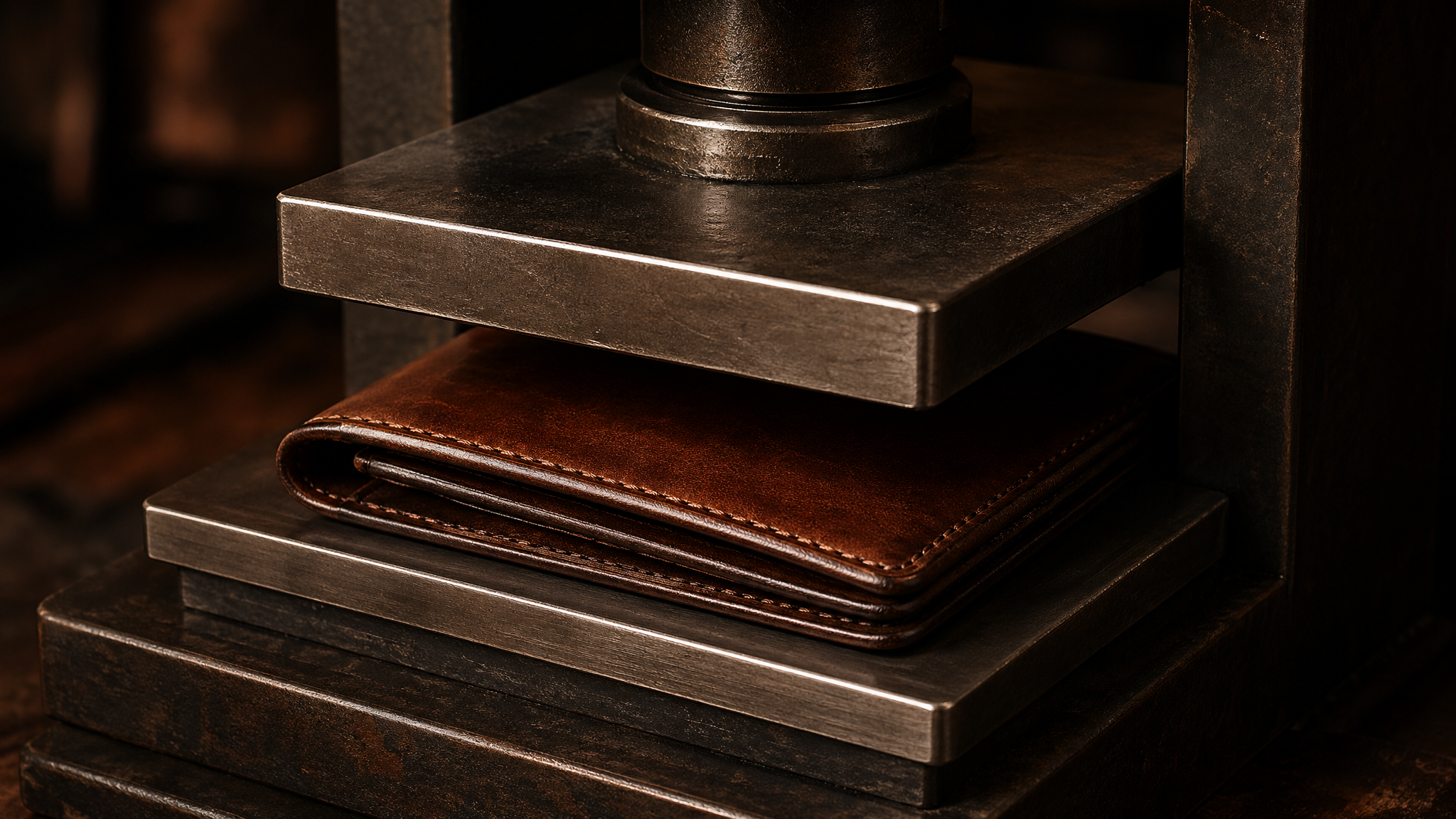
The assembled product is pressed or shaped so layers settle, edges align and the final silhouette becomes clean.
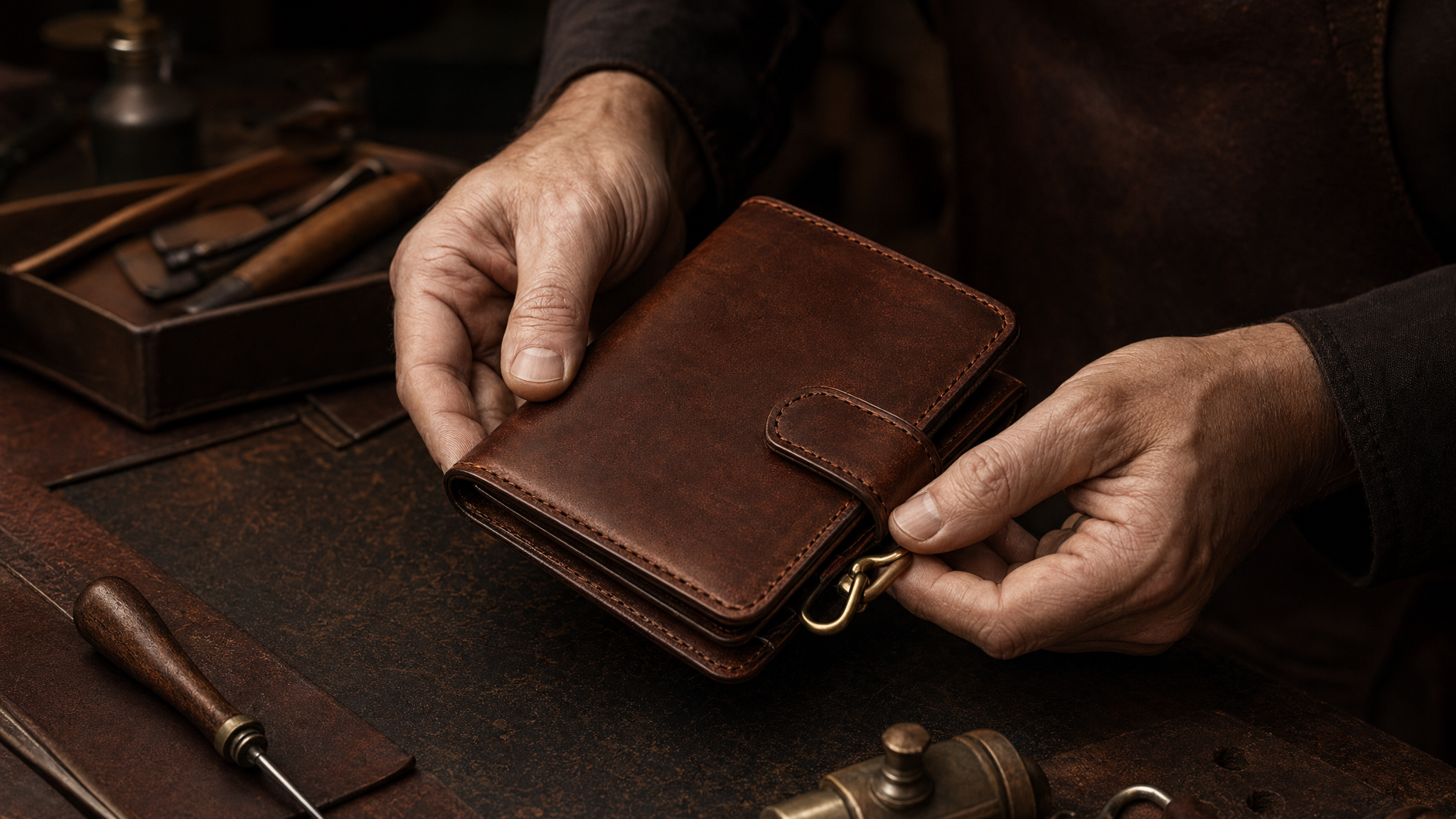
Surface, stitching, alignment, edge finish, hardware, lining and proportions are inspected before packing.
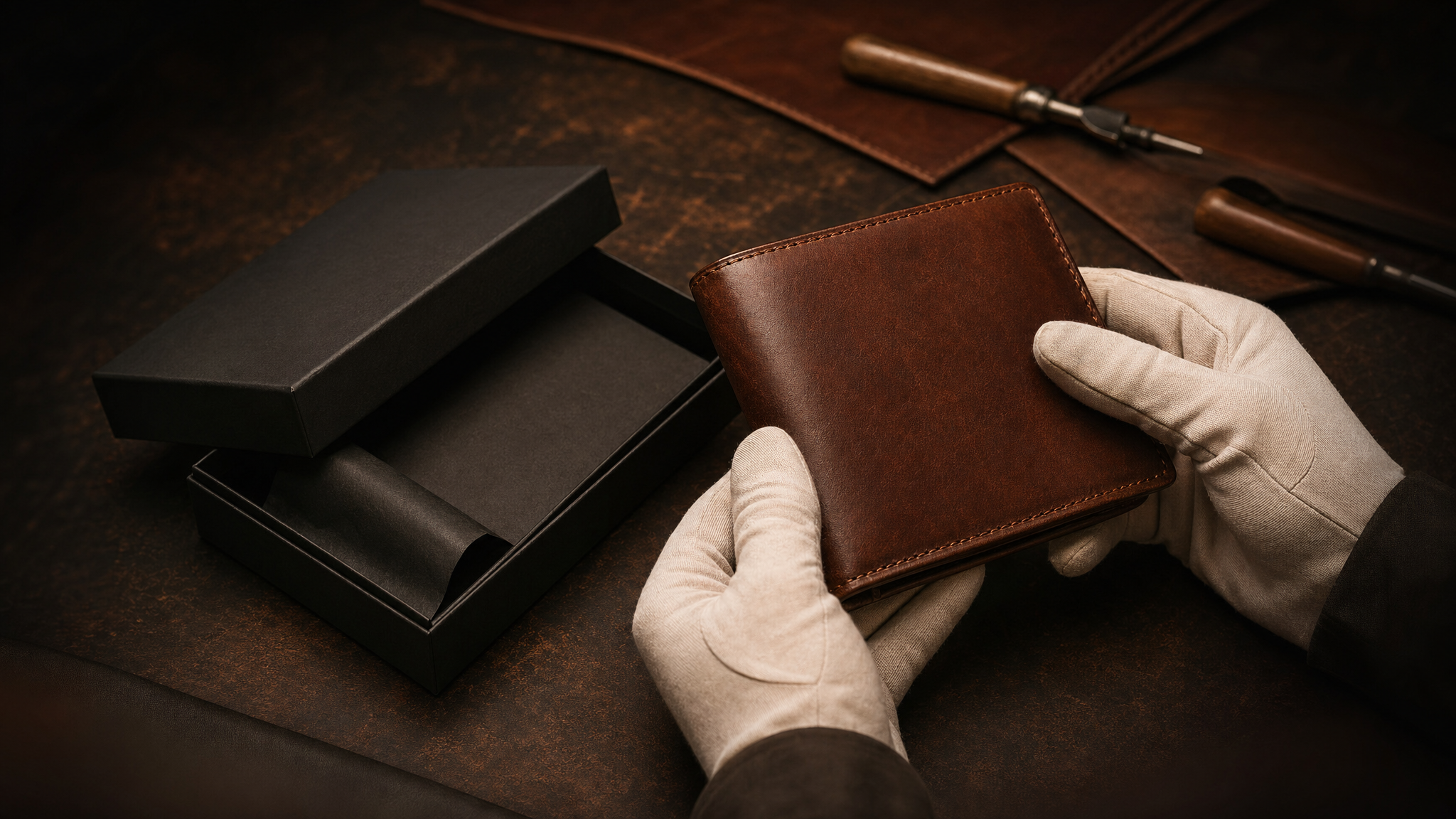
Products are protected, wrapped and packed according to buyer presentation and export handling requirements.
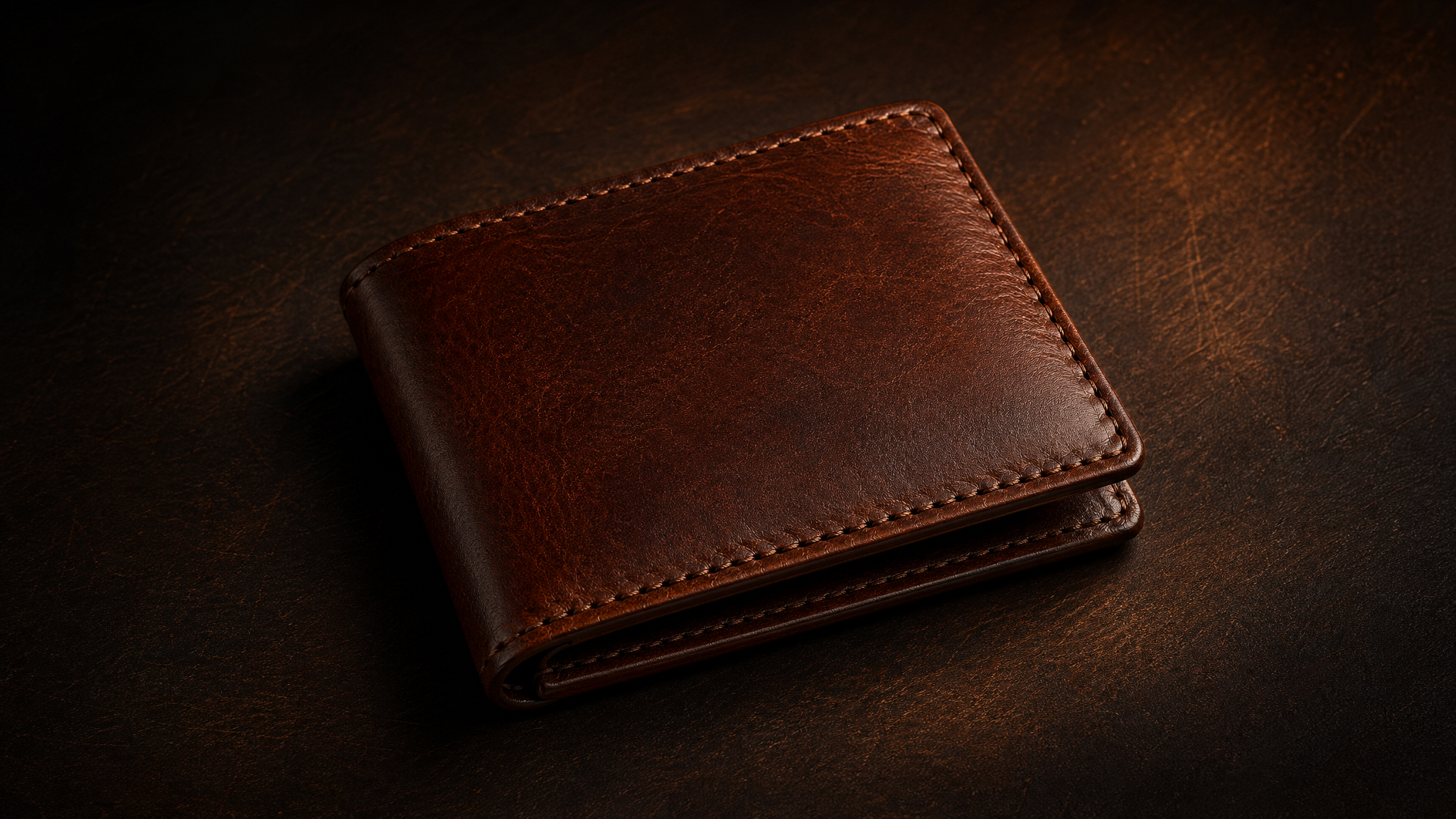
The final product should feel balanced in hand: clean edges, controlled stitching, honest leather character and confident presentation.
Buyer meaning
A buyer is not only sourcing one sample. They are sourcing repeatability: the same finish, the same structure, the same packaging standard, and the same confidence across the order.
Prepare a buyer brief